ManagementISSN 0976-4739
DOI 10.34047/bjmr
BVIMSR’s Journal of Management Research (BJMR) is an International journal, which aims at publishing high quality research findings in various disciplines of business management. There is a constant need for innovation in Management thinking to come up with appropriate solutions to the current business problems. BJMR invites research papers, articles, case studies, book reviews & comments from the world of management. We invite both academicians & practitioners to come forward with their thoughts in the form of research papers or articles. BJMR welcomes and honours devoted understanding of issues in the management of global enterprises, management theory & practice and providing theoretical and management implications useful for further development of the research.
BJMR is a Bi-annual publication of accepted papers and articles. It will be available in the printed form. Electronic submissions (MS-Word) of research paper including articles, case studies, and book review in all areas of business management are invited. Authors of accepted papers will be notified by email.
All papers will be subjected to a blind review process constituted by experts from institutions in and outside India.Print ISSN : 0976-4739College Website: https://bvimsr.org/bvimsrs-journal-of-management-research/
ManagementAI & MLe-ISSN 3143-4746
DOI 10.34047/ijgaml
ISSN: 3143-4746Frequency: Half YearlyPublisher: Imperial Publications
International Journal of Generative AI and Machine Learning (IJGAIML) is a peer-reviewed scholarly journal dedicated to advancing research, innovation, and practical applications in Generative Artificial Intelligence, Machine Learning, Deep Learning, and intelligent computational systems. The journal provides an international platform for researchers, academics, industry professionals, developers, and practitioners to publish original research and emerging developments in rapidly evolving AI technologies.
IJGAIML focuses particularly on the development and application of generative models, large language models, multimodal artificial intelligence, autonomous systems, intelligent agents, machine learning algorithms, neural architectures, and data-driven computational methods. The journal welcomes theoretical contributions as well as experimental, computational, and application-oriented studies demonstrating significant advances in the field.
The journal encourages interdisciplinary research connecting AI and machine learning with healthcare, education, engineering, finance, business, cybersecurity, scientific research, natural language processing, computer vision, robotics, digital transformation, and other emerging application domains.
International Journal of Generative AI and Machine Learning aims to contribute to the global research community by disseminating innovative methodologies, empirical findings, frameworks, algorithms, and practical solutions that advance the capabilities, reliability, efficiency, and responsible use of artificial intelligence.
AI & MLe-ISSN 3143-472X
DOI 10.34047/jicas
Journal of Intelligent Computing and Autonomous Systems (JICAS) is an international, peer-reviewed scholarly journal dedicated to research and innovation in intelligent computing, artificial intelligence, machine learning, robotics, autonomous systems, and intelligent cyber-physical technologies.
The journal provides a multidisciplinary platform for researchers, academics, engineers, scientists, and industry professionals to disseminate original research, theoretical developments, experimental studies, algorithms, architectures, and real-world applications involving intelligent computational and autonomous technologies.
JICAS particularly focuses on the integration of artificial intelligence, machine learning, computer vision, robotics, autonomous navigation, intelligent control, multi-agent systems, reinforcement learning, edge intelligence, human–robot interaction, and cyber-physical systems. The journal welcomes research addressing the complete autonomy pipeline, from perception and sensing to reasoning, planning, decision-making, learning, control, and physical execution.
The journal also encourages interdisciplinary research in autonomous vehicles, UAVs and drones, industrial robotics, healthcare robotics, smart cities, intelligent transportation, manufacturing, agriculture, space and underwater systems, cybersecurity, and other emerging application domains. Research on safe, reliable, explainable, adaptive, energy-efficient, and human-centered autonomous systems is particularly encouraged.
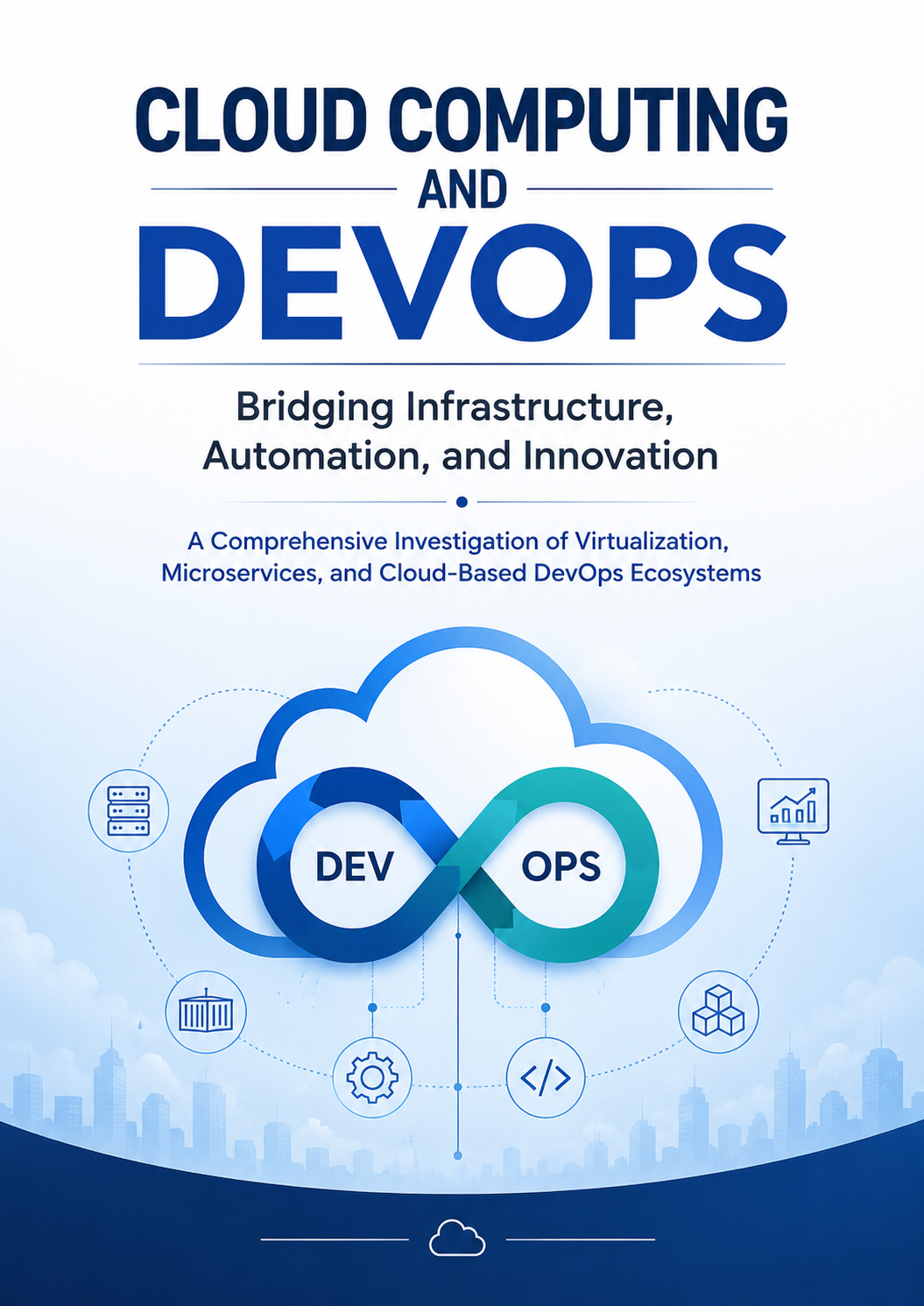 Computer
Dr. Kamal Shah, Ms. Aishwarya Churi, Mrs Karishma Jamir Tamboli, Mr. Pranjal Save
ISBN 978-81-998007-4-8
This book presents a comprehensive and practice-oriented exploration of modern cloud computing, resilient microservices architecture, advanced cloud security practices, dataengineering frameworks, and financial governance in cloud environments. Designed to address the rapidly evolving landscape of distributed systems and enterprise cloud adoption, the volume integrates theoretical foundations with hands-on implementation strategies relevant to contemporary industry practices.Beginning with fundamental concepts, the book establishes a strong foundation in cloud computing principles, including deployment models (Public, Private, Hybrid, and CommunityCloud) and service models (SaaS, PaaS, and IaaS). It critically compares cloud computing with other computing paradigms such as grid, distributed, peer-to-peer, and client–serverarchitectures, enabling readers to understand the technological evolution and architectural tradeoffs that shaped modern cloud systems.The second chapter transitions into resilient microservices architecture tailored for Java developers, reflecting the industry's shift from monolithic systems to distributed cloud-nativeapplications. It explores architectural transformation strategies including the Strangler Fig Pattern and Domain- Driven Design, performance engineering in distributed systems, and essential resilience patterns such as Circuit Breaker, Bulkhead, Retry, and Graceful Degradation. The discussion extends to Kubernetes- based container orchestration, automated scaling mechanisms like Horizontal Pod Autoscaling, and integration with managed platforms such as Amazon Elastic Kubernetes Service, providing readers with operational clarity on building fault-tolerant systems.Advanced cloud security practices form a critical pillar of the book. Moving beyond traditional identity and access management, the text examines Zero Trust Architecture, Attribute-Based Access Control, Kubernetes network security, mutual TLS, automated threat detection systems, and cloud- native incident response frameworks. Real-world tools including AWS GuardDuty, AWS Security Hub, and AWS Lambda are analyzed to demonstrate automated remediation and security orchestration in modern environments.Recognizing the growing importance of data-driven decision-making, the book dedicates significant attention to data engineering and intelligence. It explores Data Fabric architecture,modern data lake implementation, cloud-based data pipelines using Amazon S3 and AWS Glue, and real-time business intelligence systems. Practical workflows demonstrate how organizations can transform raw cloud data into actionable insights using executive dashboards and live analytics platforms.The final section introduces FinOps and cloud governance, emphasizing cost optimization, sustainability, and responsible cloud consumption. Topics include cloud carbon footprintanalysis, green cloud computing practices, automated budgeting, anomaly detection, resource rightsizing, and strategic cost control mechanisms that align technical decisions with financial accountability.By integrating architecture, resilience engineering, cybersecurity, data intelligence, and financial governance into a unified framework, this book equips students, developers, architects, and decision- makers with the knowledge required to design scalable, secure, sustainable, and costefficient cloud ecosystems. The content balances conceptual clarity with practical applicability, making it suitable for academic study, professional certification preparation, and industry implementation.
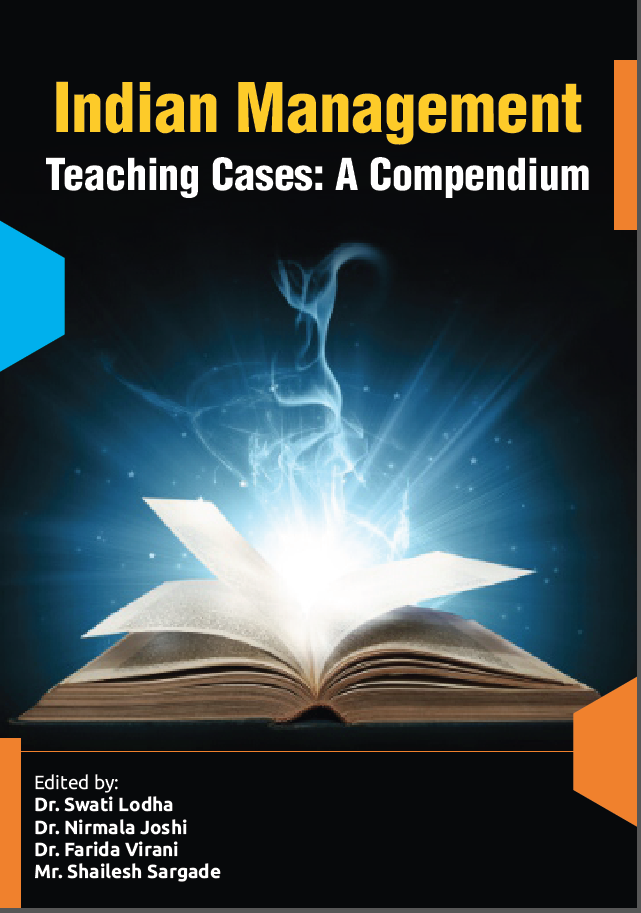 Management
Dr. Swati Lodha, Dr. Nirmala Joshi, Dr. Farida Virani Mr. Shailesh Sargade
ISBN 978-93-91044-94-7
Indian Management Teaching Cases: A Compendium is a comprehensive collection of real-world management case studies designed to bridge the gap between management theory and business practice. Developed through a collaborative Faculty Development Program on case writing and teaching, this volume presents authentic business scenarios from diverse industries, enabling readers to analyze complex managerial challenges and develop strategic decision-making skills. The book covers a broad spectrum of contemporary management domains, including strategic management, human resource management, marketing, digital transformation, organizational behaviour, leadership, entrepreneurship, healthcare management, pharmaceutical distribution, sustainability, financial services, diversity and inclusion, and innovation. Each case is carefully structured to encourage critical thinking, classroom discussion, problem-solving, and practical application of management concepts.Featuring eleven engaging teaching cases, the compendium explores topics such as women leadership and workplace diversity, digital transformation in the pharmaceutical supply chain, artificial intelligence in healthcare marketing, brand management, banking innovation, transformational leadership, tribal education, labour relations, and sustainable business practices. Every chapter concludes with discussion questions that make the book an excellent resource for case-based learning, management education, executive training, and academic research.Edited by Dr. Swati Lodha, Dr. Nirmala Joshi, Dr. Farida Virani, and Mr. Shailesh Sargade, this volume serves as a valuable reference for MBA and PGDM students, faculty members, corporate trainers, researchers, and management professionals seeking practical insights into contemporary business challenges. By combining academic rigor with real-life organizational experiences, Indian Management Teaching Cases: A Compendium equips readers with the analytical frameworks and decision-making capabilities required to navigate today's dynamic business environment.
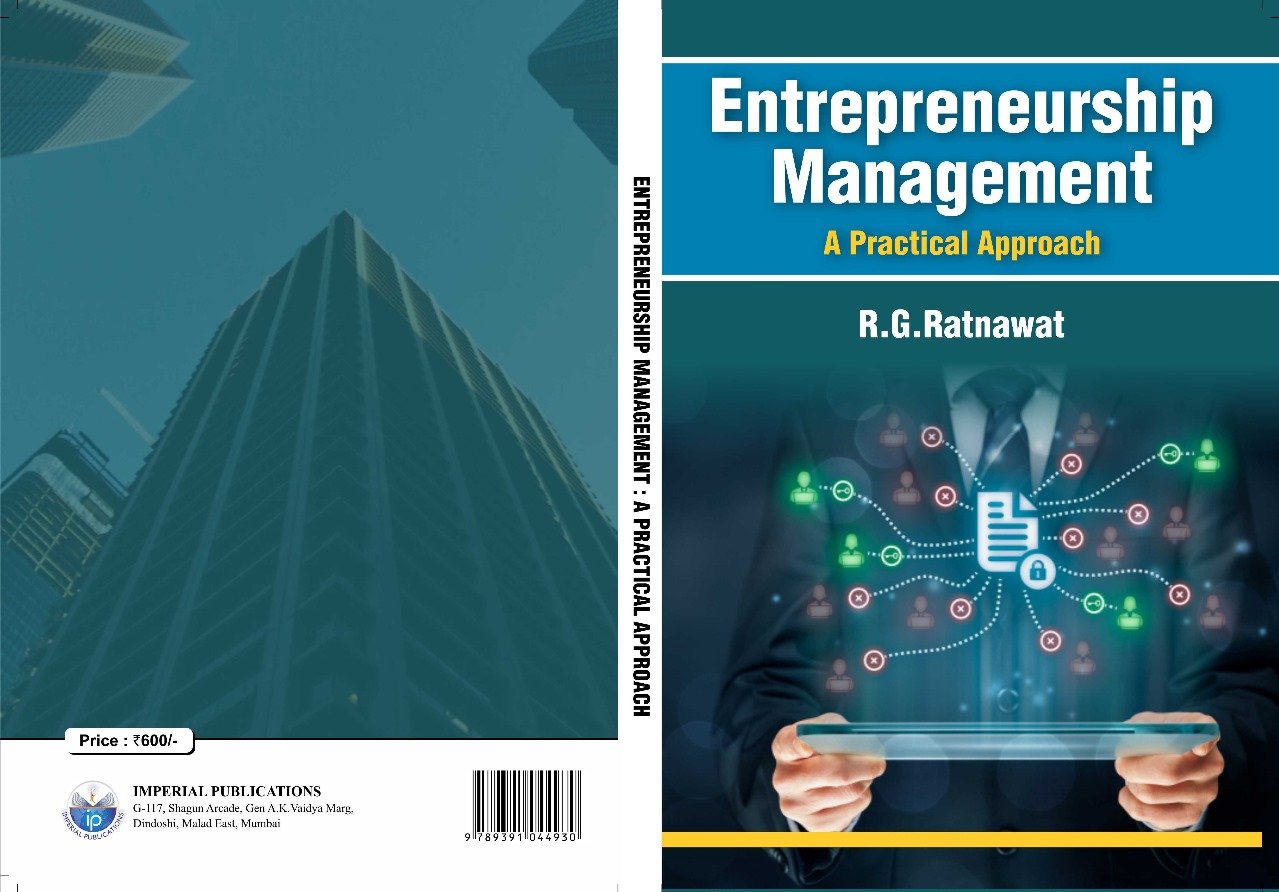 Management
R. G. Ratnawat
ISBN 978-93-91044-93-0
Entrepreneurship Management: A Practical Approach by R.G. Ratnawat is a comprehensive textbook designed to help students, aspiring entrepreneurs, startup founders, educators, and business professionals understand the complete entrepreneurial journey—from identifying business opportunities to successfully managing and scaling an enterprise.Written in a practical and easy-to-understand style, this book combines entrepreneurial theory with real-world applications, making it an ideal learning resource for management education and entrepreneurship development programmes. The book introduces readers to entrepreneurial thinking, opportunity identification, product development, business planning, startup financing, legal compliance, marketing, operations, leadership, innovation, sustainability, international expansion, risk management, and entrepreneurial exit strategies.The book includes practical examples, case studies, global entrepreneurial success stories, business planning techniques, market analysis, innovation frameworks, customer-focused strategies, and startup management tools that enable readers to understand how successful businesses are created and managed.Covering 17 well-structured chapters, this book provides a complete roadmap for launching, managing, and growing successful ventures in today's competitive business environment.Whether you are preparing for university examinations, planning to launch your own startup, teaching entrepreneurship, or improving your business management skills, this book serves as an invaluable practical guide.Published by Imperial Publications, the book is suitable for universities, colleges, libraries, management institutes, entrepreneurship development centres, incubation centres, and professional training programmes.Key FeaturesComprehensive coverage of Entrepreneurship ManagementPractical approach with real-world examplesStep-by-step business planning guidanceStartup opportunity identification techniquesProduct development and innovation managementBusiness strategy and competitive advantageEntrepreneurial mindset developmentStartup financing and investment guidanceMarketing and sales management for entrepreneursOperations and supply chain managementLeadership and team-building strategiesLegal and regulatory considerations for startupsRisk management and business continuity planningSustainable entrepreneurship practicesInternational business expansion strategiesEntrepreneurial exit planningCase studies and practical business insightsIdeal for classroom learning and self-studyTable of Major Topics CoveredIntroduction to EntrepreneurshipEntrepreneurial MindsetBusiness Opportunity IdentificationProduct DevelopmentBusiness PlanningStartup FinancingLegal FrameworkLeadership & Team BuildingMarketing ManagementSales StrategiesOperations ManagementSupply Chain ManagementBusiness Growth StrategiesInnovation & CreativityRisk ManagementSustainable EntrepreneurshipInternational EntrepreneurshipBusiness Exit StrategiesFuture of EntrepreneurshipWho Should Read This Book?MBA StudentsBBA StudentsB.Com StudentsM.Com StudentsEntrepreneurship Development StudentsManagement FacultyStartup FoundersSmall Business OwnersIncubation CentresInnovation LabsBusiness ConsultantsProfessional EntrepreneursCollege LibrariesUniversity LibrariesCorporate Training Institutes
 Engineering
Dr. Amogh Anil Sambare
ISBN 978-93-91044-86-2
This book presents an integrated study of perovskite-based chemiresistive gas sensors, combining Density Functional Theory (DFT) modeling and experimental validation to establish a comprehensive understanding of gas–surface interactions. The research focuses on Bismuth Ferrite (BiFeO₃) and its Ag-doped variants, highlighting their potential as efficient, low-cost materials for detecting toxic automotive and industrial gases such as CO, NO, NO₂, and SO₂.Beginning with the fundamental principles of perovskite oxides, the book explores the electronic structure, adsorption energetics, and charge transfer mechanisms of BFO surfaces using DFT simulations. These theoreticalinsights are then linked to experimental studies involving the synthesis, structural and spectroscopic characterization, and gas sensing performance of pure and Ag-doped BFO films.Through systematic analysis, the work demonstrates how Ag doping enhances adsorption, sensitivity, and selectivity, while reducing operating temperatures. The book concludes with perspectives on future advancements in nanostructured gas sensors, AI-assisted sensing arrays, and hybrid material systems.This volume is a valuable resource for researchers, engineers, and graduate students working in materials science, nanotechnology, solid-state physics, and environmental monitoring.
 Management
Dr Elizabeth Dias, Ms. Alina Dmello
ISBN 978-81-69880-00-8
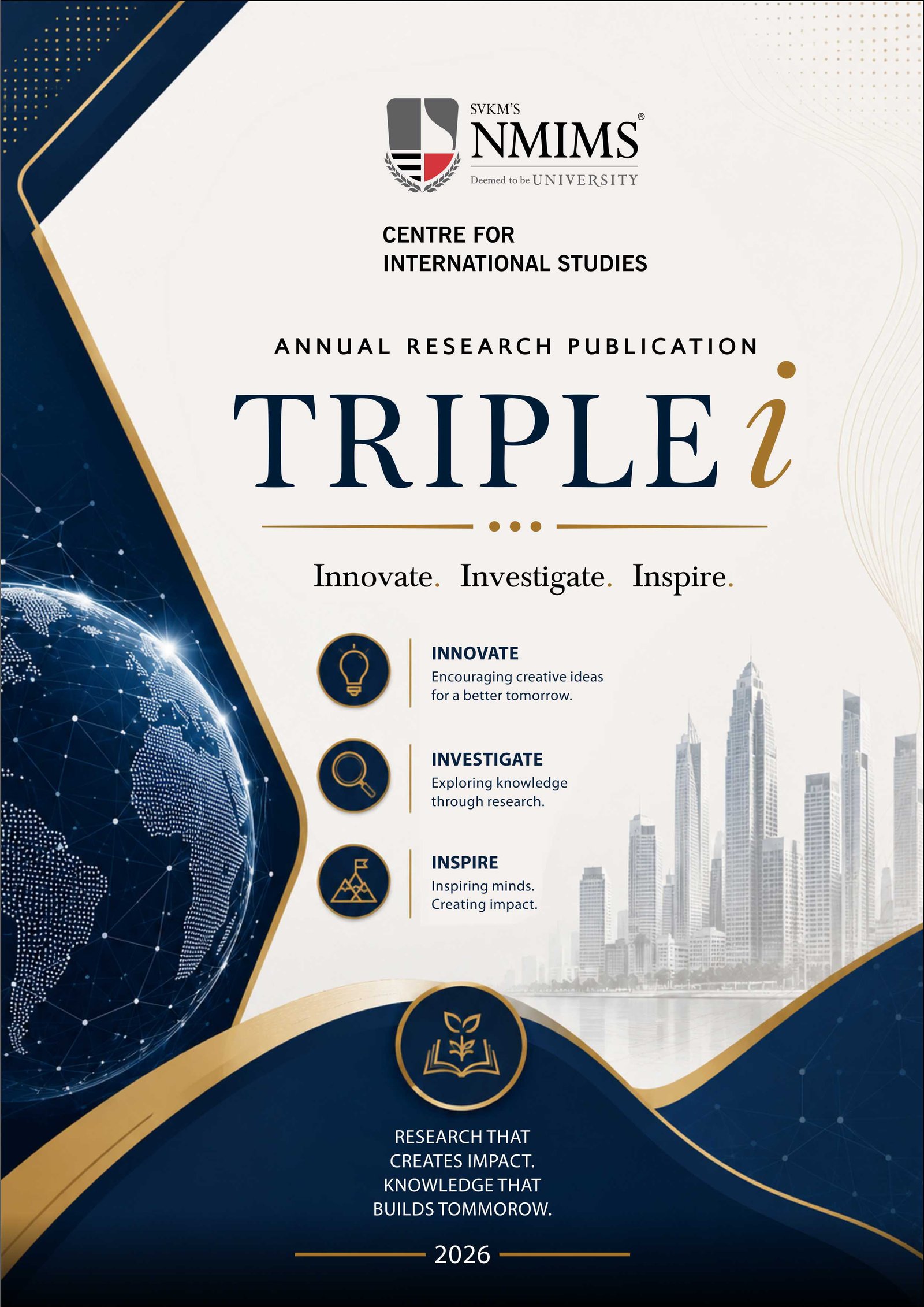
Triple i – Innovate. Investigate. Inspire. is an annual research publication by the SVKM’s NMIMS Centre for International Studies (CIS), showcasing selected research papers presented at its Student Research Symposium. The publication promotes undergraduate research, innovation, critical thinking, interdisciplinary scholarship, and evidence-based inquiry across contemporary areas including artificial intelligence, entrepreneurship, strategic management, branding, consumer psychology, sustainability, logistics and supply chain management, environmental governance, leadership, public policy, education, and emerging business practices. SEO Keywords: Triple i Innovate Investigate Inspire, NMIMS Centre for International Studies, student research publication, undergraduate research, academic research, interdisciplinary research, research symposium, innovation and research, business and management research, student research journal, academic publication.
 Management
CA Dr. Das, Dr. Harshada Mulay, Dr. Rashmi Nair, Prof. Anand Limaye
ISBN 978-81-998007-8-6
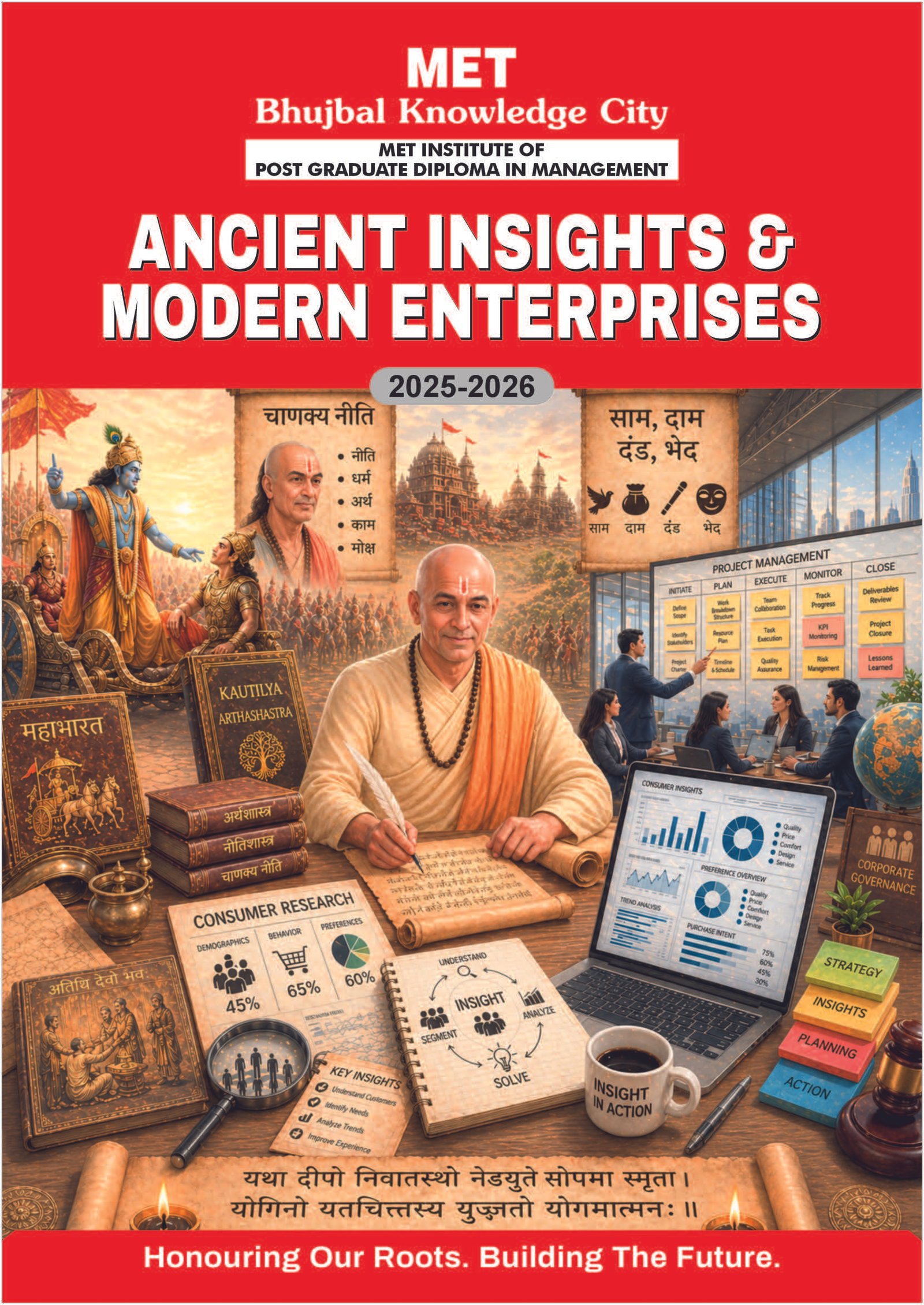
Ancient Insights and Modern Enterprises is a thought-provoking compilation of research papers that bridges the timeless wisdom of India's classical knowledge systems with the realities of contemporary business and management. Developed by the students of the MET Institute of PGDM (Batch 2024–2026), this volume demonstrates how ancient Indian texts continue to offer practical guidance for leadership, governance, strategic decision-making, organizational excellence, marketing, finance, and human resource management in today's dynamic corporate environment. Drawing upon the enduring teachings of the Arthashastra, Mahabharata, Ramayana, Vedas, and Thirukkural, the book presents a series of original research studies that reinterpret traditional philosophies through the lens of modern management. The contributors examine a wide range of contemporary business topics, including corporate acquisitions, leadership styles, employee motivation, project management, consumer behaviour, brand positioning, market intelligence, portfolio diversification, tourism marketing, organizational culture, and sustainable corporate strategy. Each chapter illustrates how ancient Indian principles can provide innovative solutions to present-day organizational challenges while promoting ethical leadership and long-term value creation.The research papers employ qualitative analysis, conceptual frameworks, and real-world corporate case studies to dem onstrate the relevance of indigenous knowledge in modern enterprises. By integrating traditional Indian philosophy with contemporary management theories, the book encourages readers to move beyond conventional Western business models and embrace a holistic, value-driven approach to management, governance, and strategic thinking.Edited by CA Dr. Das, Dr. Harshada Mulay, Dr. Rashmi Nair, and Prof. Anand Limaye, Ancient Insights and Modern Enterprises is an invaluable resource for management students, researchers, academicians, corporate professionals, policymakers, and business leaders interested in Indian Knowledge Systems (IKS), strategic management, leadership, organizational behaviour, and business ethics. It serves as both an academic reference and a practical guide for those seeking to build future-ready organizations inspired by India's rich intellectual heritage.